IT support
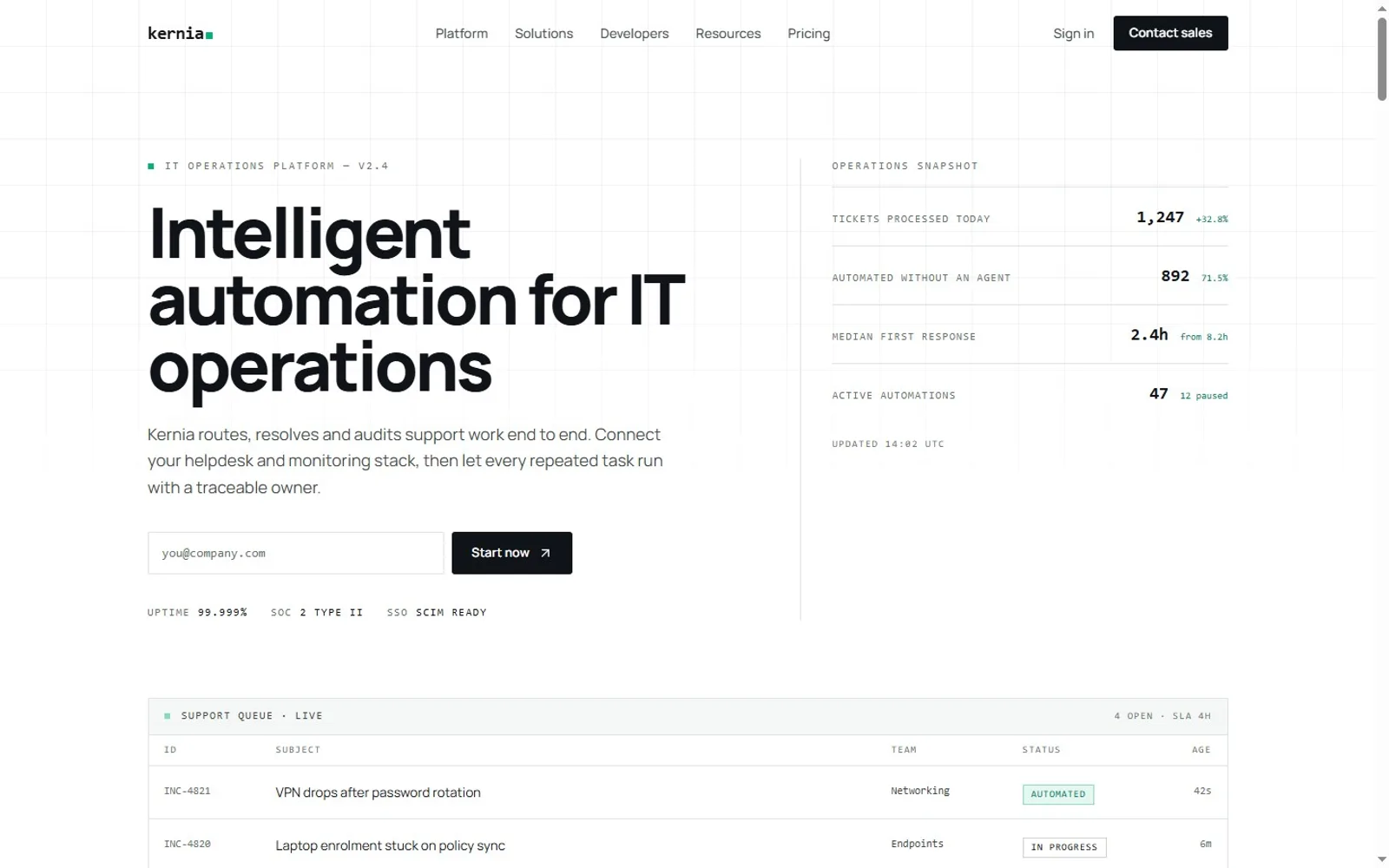
Kernia: IT operations site with a control-room visual language
Ten-band site for an IT operations platform: a ticket queue in the hero, instrument-panel features, a use-case matrix and a terminal API section, on ink, signal green and paper.
Stack & specs
How it's built
Technologies and technical decisions behind the panel above.
- Next.js
- React
- TypeScript
- Tailwind CSS
- Vercel
Specifications
- Visual language
- Ink, signal green and paper on a 4 px radius scale, with hairlines instead of cards
- Structure
- Ten bands with their own layout and only four shared primitives in shell.tsx
- Typography
- Manrope for prose and a monospace stack for labels, ticket IDs and metrics
Results
What we unlocked
Concrete operational changes — not vanity metrics.
Ten bands with their own structure on two shared layers: Shell, SectionHead, Eyebrow and Rule
Type with two jobs: Manrope for prose, monospace for labels, ticket IDs and metrics
In their words
What the team says
“Each band tells one part of the product — ticket queue, panels, use cases and API — and stands on its own.”
10 sections
one route with anchors and a mobile sheet
7 tokens
from ink to line, on a 4 px radius scale
Services
What we combined
The services that shaped this project — each with its own scope and phases.
- Websites
Digital presence that converts visits into conversations.
- UI/UX design
UI/UX design scoped for daily use—not a one-off demo.
Project FAQ
Questions before you book
What teams usually ask when reviewing a case like this.
Want a similar outcome?
Tell us about your operations in 30 minutes. We'll define the first phase clearly.
