Product design
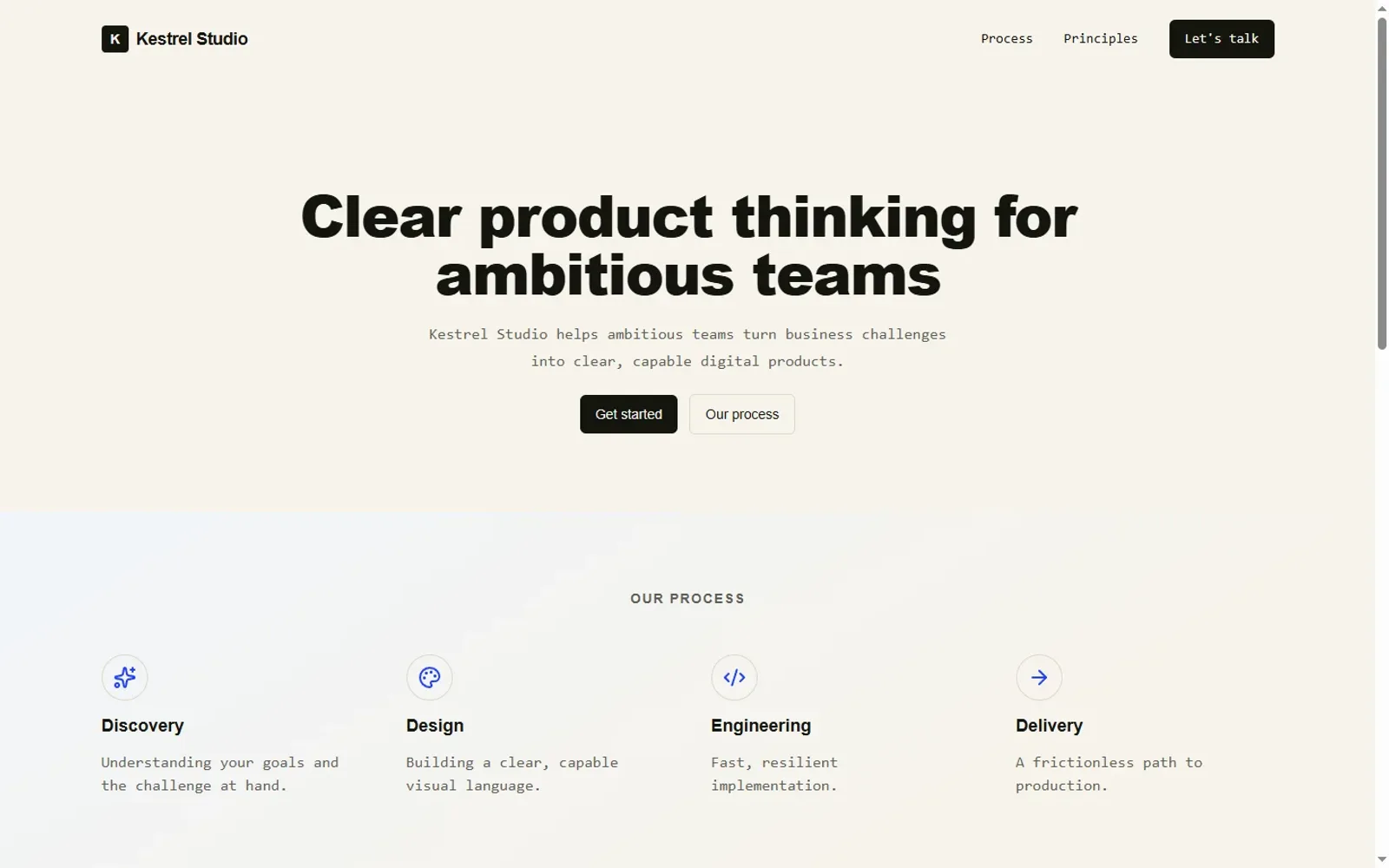
Kestrel Studio: editorial landing for a digital product studio
Studio landing: hero, process, principles and collaboration models, with an earthy editorial palette in Tailwind v4 tokens, a local image and no remote fonts or media.
Stack & specs
How it's built
Technologies and technical decisions behind the panel above.
- Next.js
- React
- TypeScript
- Tailwind CSS
- Vercel
Specifications
- Design system
- Five colour tokens in globals.css on Tailwind v4, with no legacy config
- Assets
- One generated CTA image served from public/, plus an SVG favicon; zero remote media
- Delivery
- Continuous deployment from GitHub to Vercel on the edge network, with no backend or forms
Results
What we unlocked
Concrete operational changes — not vanity metrics.
Five colour tokens in globals.css and no brand values scattered through components
One self-hosted CTA image and no remote font or tracking service
In their words
What the team says
“The palette lives in five tokens and a single local image; no third-party asset is left that could fail or change underfoot.”
5 tokens
paper, ink, gray, line and accent
1 image
local JPG served from public/
Services
What we combined
The services that shaped this project — each with its own scope and phases.
- Websites
Digital presence that converts visits into conversations.
- UI/UX design
UI/UX design scoped for daily use—not a one-off demo.
Project FAQ
Questions before you book
What teams usually ask when reviewing a case like this.
Want a similar outcome?
Tell us about your operations in 30 minutes. We'll define the first phase clearly.
